Our lab studies how genetic variation, genome editing, and stem-cell biology intersect to shape blood development and disease. We focus on mechanisms that regulate globin gene expression, maintain genome stability in hematopoietic stem cells, and influence responses to emerging genetic therapies. Our goal is to translate mechanistic insight into safer, more durable treatments for inherited blood disorders.
Functional genomics of hemoglobin switching
Hemoglobin switching is the developmental shift from fetal γ-globin to adult β-globin that occurs in early infancy. When this switch happens, symptoms of sickle cell disease and β-thalassemia begin to appear. Our lab studies the genetic and epigenetic elements that control this transition, how specific variants, regulatory elements, chromatin states, and other cell-intrinsic factors determine when γ-globin is turned off and how fetal hemoglobin is distributed across individual red blood cells. By mapping these mechanisms with tools like CUT&RUN, CUT&Tag, single-cell sequencing, and CRISPR editing, we aim to design therapies that safely and durably reactivate γ-globin and achieve more uniform, protective HbF levels to treat β-hemoglobinopathies.
DNA damage responses in blood stem cells
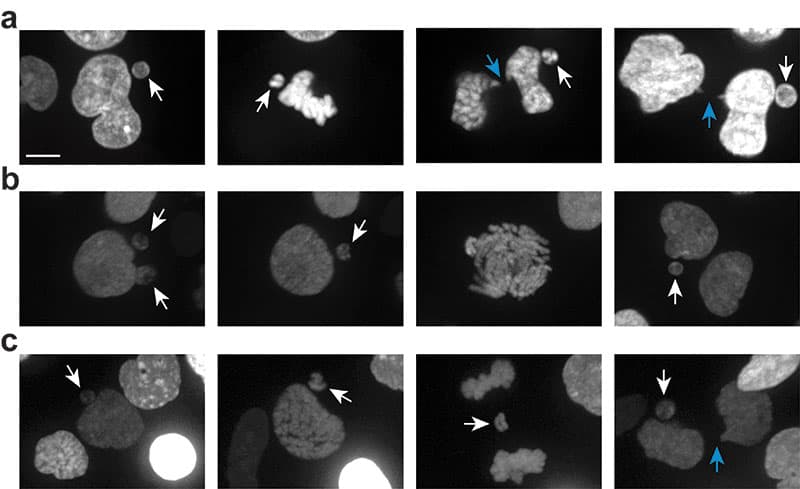
Gene editing introduces double-strand DNA breaks, but blood stem cells don’t always repair those breaks cleanly. We study what happens to hematopoietic stem and progenitor cells after editing, how often they develop mitotic errors such as micronuclei, chromosome segregation defects, or long-term chromosomal alterations, and which DNA repair pathways protect them from aneuploidy or chromothripsis. Our goal is to define the full spectrum of genome-stability risks in CRISPR-based therapies and to identify strategies that make edited stem cells safer, more stable, and more clinically reliable. Micronuclei in CD34 cells
Techniques and Approaches:
Genomics and Epigenomics
Single-cell RNA sequencing
Single-cell chromatin accessibility profiling
CUT&RUN and CUT&Tag epigenetic profiling
Whole-genome sequencing and variant analysis
Genome Editing and Molecular Biology
CRISPR/Cas9 genome editing and base editing
Digital PCR for copy number and genome integrity assessment
Quantitative PCR
Western blotting
Bacterial culture and cloning
Stem Cell and Erythroid Biology
Cell culture of primary blood stem cells
Erythroid differentiation assays
In vivo functional validation of edited blood stem cells
Genome Stability and DNA Damage
DNA damage and genome stability assays (micronuclei, chromosome segregation defects)
Analysis of mitotic fidelity and cell cycle progression in edited stem cells
Identification and fate tracking of genomically unstable cells during hematopoiesis